Window: Depreciation Methods
[Created: 30/05/2008 - Updated: 12/04/2012 ]
Description: Depreciation Methods
Help: The Depreciation method windows allows the user to review the depreciation calculations available in Adempiere
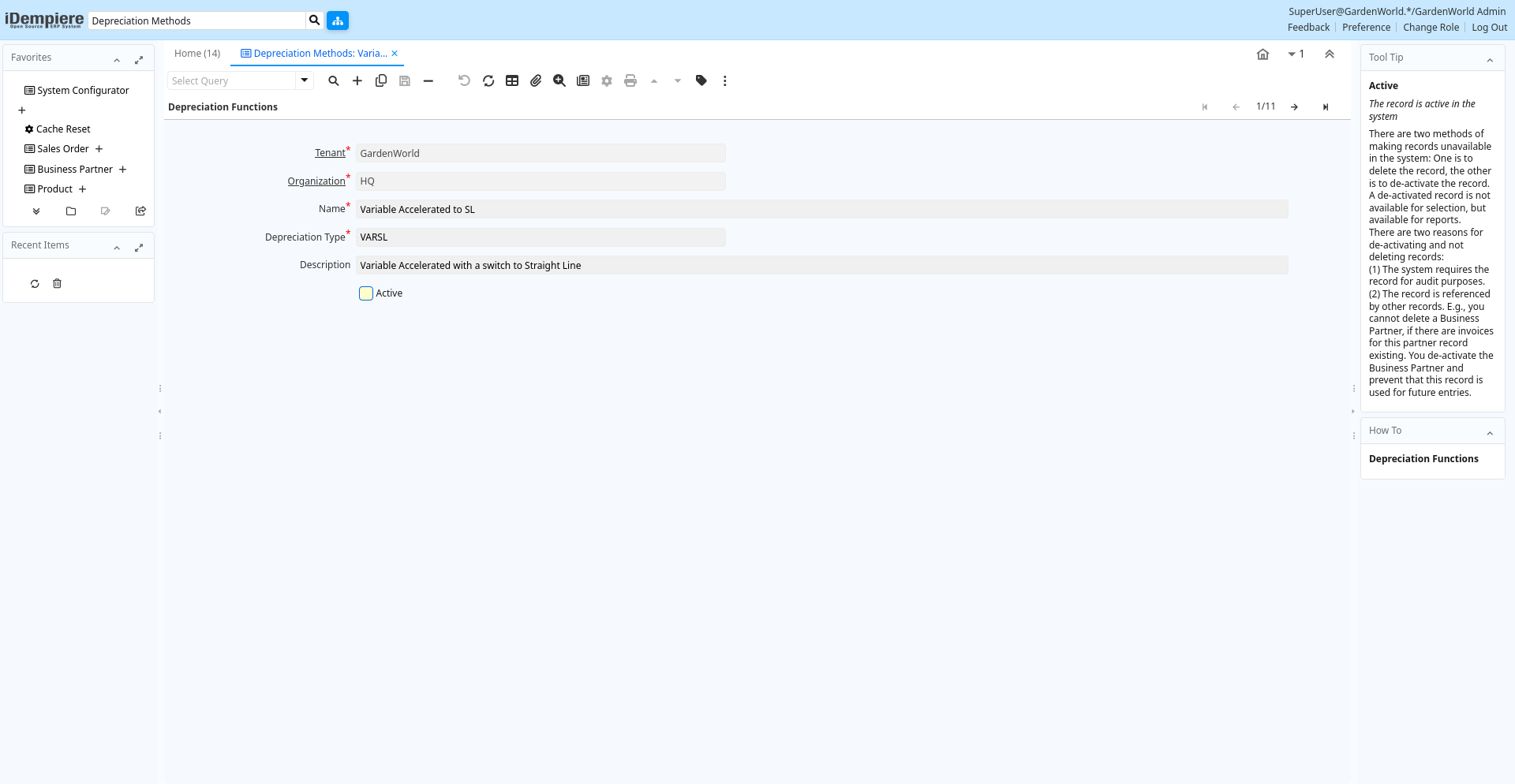
Tab: Depreciation Functions
[Created: 30/05/2008 - Updated: 28/03/2013 ]
Description:
Help:
Tab Level: 0
Table 10: Depreciation Functions - Fields
Table: Report Parameters
| Name | Description | Help | Technical Info |
|---|---|---|---|
| Tenant | Tenant for this installation. | A Tenant is a company or a legal entity. You cannot share data between Tenants. | a_depreciation.AD_Client_ID numeric(10) Table Direct |
| Organization | Organizational entity within tenant | An organization is a unit of your tenant or legal entity - examples are store, department. You can share data between organizations. | a_depreciation.AD_Org_ID numeric(10) Table Direct |
| Name | a_depreciation.Name character varying(120) String | ||
| Depreciation Type | a_depreciation.DepreciationType character varying(10) String | ||
| Description | Optional short description of the record | A description is limited to 255 characters. | a_depreciation.Description character varying(510) String |
| Active | The record is active in the system | There are two methods of making records unavailable in the system: One is to delete the record, the other is to de-activate the record. A de-activated record is not available for selection, but available for reports.There are two reasons for de-activating and not deleting records:(1) The system requires the record for audit purposes.(2) The record is referenced by other records. E.g., you cannot delete a Business Partner, if there are invoices for this partner record existing. You de-activate the Business Partner and prevent that this record is used for future entries. | a_depreciation.IsActive character(1) Yes-No |